Essential BBQ Tools: The Gear You Actually Need (And What's a Waste of Money)

Updated: May 17
You can spend $2,000 on gadgets nobody uses. Or you can buy the things that solve 90% of every cooking problem. Let me save you money and cabinet space.
The Non-Negotiables
These are the tools I’d buy first. Not because they’re flashy. Because you’ll use them constantly.
1. Meat Thermometers
This is the difference between guessing and knowing. A good thermometer keeps you from undercooked chicken, overcooked steak, and brisket panic. You don’t need three different lectures here. You just need to know what’s happening inside the meat.
Types worth considering:
Instant-read thermometer - Best for quick checks on chicken, steak, burgers, fish, and anything coming off the grill. This is great for grilling but if you're more focused on smoking I'd look at the next two. Instant-read thermometers require you to open the lid and stab the meat, and we all know you want to reduce lid opens when smoking.
Wireless probe thermometer - Best for long cooks when you want to track temperature from your couch. I like the MEATER because it's a funny name and it works great.
Wired thermometer - Best as a reliable backup for long smokes, especially when Bluetooth range gets weird.
What to avoid:
Cheap dial thermometers.
Novelty fork thermometers. They suck.
Anything painfully slow or obviously inaccurate.
You will use a thermometer every cook. Buy one that’s accurate and easy to read.
Not tiny kitchen tongs. Not flimsy tongs that twist when you pick up a chicken thigh.
Why they matter:
They keep your hands away from heat.
They help move meat, vegetables, sausages, and foil packets.
Good tongs become an extension of your hand.
What to look for:
Around 16 inches long. Your hand should not be six inches from a hot grill because your tongs are built like office supplies.
Stainless steel.
Spring-loaded.
Strong grip.
Easy to clean.
3. Spatula
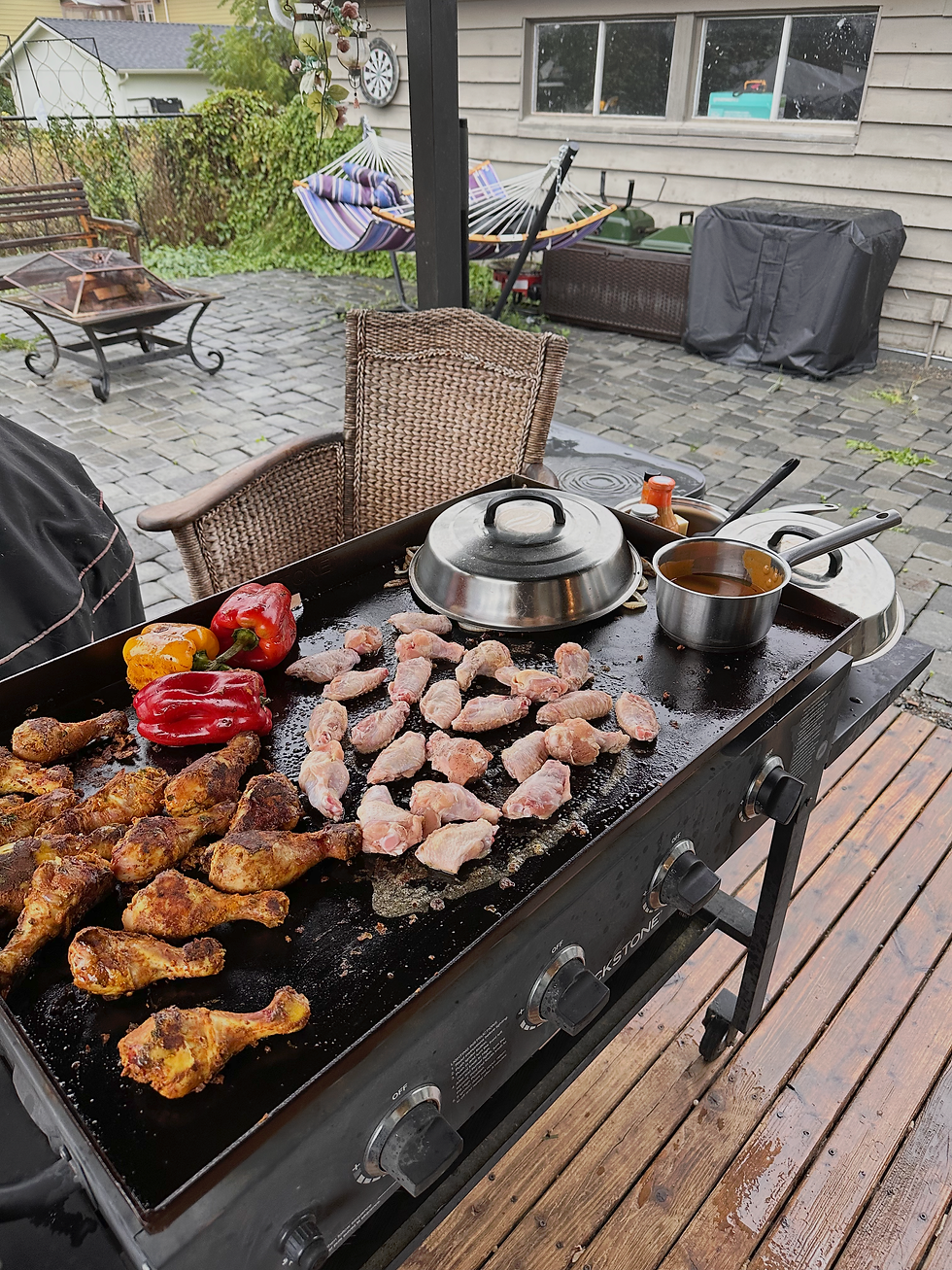
A spatula absolutely belongs on the essentials list. You need it for burgers, fish, vegetables, flat top cooking, and anything delicate enough that tongs would tear it apart. If you cook on a Blackstone or any flat top, get two spatulas. They’re essential.
There are two kinds I'd consider:
Longer flat-top spatula - these are great overall but essential for flat tops. Again, if you're on the flat top get two so you can pick up those caramelized onions you'll be making easier.
Grill spatula - I like the Sportula because:
it's a great spatula
it has a beer bottle opener
why not rep your squad?
At some point, BBQ asks you to touch something hot. A grate. A pan. A brisket. A rib rack. A foil tray full of rendered meat juice. A kamado part that looks harmless but is secretly holding the temperature of the sun.
Why BBQ gloves matter:
Hot metal hurts.
Hot grease hurts more.
Big cuts of meat are awkward.
Wrapping brisket or pork shoulder is much easier with gloves.
Do not use regular kitchen oven mitts unless you enjoy learning lessons loudly.
5. Cleaning Supplies
Every grill needs cleaning. The exact gear depends on what you cook on. At minimum, you’ll want something to clean grates and scrape stuck-on food. A dirty grill is not “seasoned.” It’s just dirty.
At the most basic you need a grill brush or scraper for grates. I like bristle-free scrapers so I don't have to worry about rogue wire bristles getting into my food.
If you have Blackstone or other flat top, you need some more specific cleaning supplies. Make sure you know what you need for your specific grill, but I can bet you'll need a grill brush regardless.
The Nice-to-Haves That Are Actually Worth It
Once you have the basics, these tools can make life easier. You don’t need all of them on day one, but they solve real problems.
A spray bottle is simple, cheap, and useful. You do not need the luxury version of a spray bottle. This is BBQ, not skincare.
Butcher paper is worth having if you smoke brisket, beef ribs, pork shoulder, or lamb shoulder. It seems unnecessary until you use it once. Then it becomes part of the ritual.
Why it helps:
Pushes through the stall.
Preserves bark better than foil.
Helps hold moisture without steaming the meat.
Great for resting big cuts.
Charcoal Chimney Starter (if you have a charcoal grill setup)
A chimney starter is essential for charcoal kettle grills and traditional charcoal setups.
It lights charcoal evenly without lighter fluid, which matters because lighter fluid flavor has never improved dinner. Again, you don't need this for kamados, gas grills, pellet grills, or flat tops. This is for charcoal grills and Korean BBQs.
If you cook with charcoal, this is one of the cheapest tools that actually makes a difference.
What’s a Waste of Money
Not every BBQ gadget deserves patio space. Some tools solve real problems. Others are just shiny drawer clutter with handles.
Fancy Grill Tool Sets
You know the ones. Ten pieces in a silver case. Spatula, tongs, fork, corn holders, brush, skewers, mystery scraper, and something that looks like it could disarm a medieval trap.
Why I’d skip them:
You mostly use tongs and a spatula.
The quality is usually mediocre.
The case takes up space.
Half the tools are filler.
Buy the tools you actually use. Not the suitcase.
Electric Grill Starters
Electric starters can work, but they’re usually not necessary. If you’re using charcoal, a chimney starter or fire starter squares will usually do the job cheaper and simpler.
Expensive Branded Grill Covers
You should cover your grill. You do not necessarily need the luxury branded cover that costs as much as the grill itself. Here at Bus Stop BBQ, we love a hand-me-down grill or a second-hand one you find on OfferUp. Sometimes those don't come with covers, so just get a generic one to protect your grill from the elements.
Why I’d skip the expensive ones:
Basic covers often work fine.
Weather beats up all covers eventually.
Fit matters more than logo.
You’re protecting the grill, not dressing it for prom.
Weird-Shaped Grill Brushes
Some grill brushes look like they were designed by someone who hates storage drawers.
V-shaped. Multi-angle. Scraper-claw hybrid. Battery-powered. Steam-powered. Probably one with Bluetooth by now.
Why I’d skip the weird ones:
Awkward to use.
Hard to store.
Not clearly better.
Usually more expensive.
Important safety note:
Inspect wire brushes regularly.
Replace them when worn.
Watch for loose bristles.
Consider a bristle-free scraper if that worries you.
The goal is clean grates, not dental surgery.
Grill Baskets and Divided Pans
Grill baskets can be useful, especially for small vegetables or fish. But a lot of people buy five versions and use none of them.
Why I’d wait:
They take up space.
They can be annoying to clean.
You may already have a better solution.
A flat top, soapstone, foil, or cast iron pan may solve the same problem.
If you cook vegetables constantly and love your basket, keep it. Just don’t buy three before you know your cooking style.
Motorized Rotisserie Kits
Rotisserie cooking is great.
Rotisserie kits are also classic “I’m definitely going to use this all the time” purchases.
Then they get used twice and spend the next five years taking up shelf space like a guilty conscience.
Why I’d skip it at first:
Costs a lot.
Takes up space.
Requires setup.
Only worth it if you use it often.
If you cook rotisserie chicken weekly, go for it. If you just like the idea of it, wait.
Anything “Smart” That Makes Cooking Worse When the Battery Dies
I LOVE useful tech. Thermometers? Great. Temperature tracking? Great.
But some smart BBQ gear solves problems nobody had and creates new ones involving Wi-Fi, batteries, apps, firmware, and one blinking light that refuses to explain itself.
Before buying smart gear, ask:
Does this actually make cooking easier?
Can I still cook if the battery dies?
Is the app necessary or just annoying?
Does it improve food quality?
Will I still use it in a year?
If the tool fails and your whole cook falls apart, it may be less “smart” than advertised.
Pro Tips for Buying BBQ Gear
Buy gear based on problems you actually have, not fantasies from product photos.
Buy once, cry once on the essentials.
Spend more on tools you’ll use every cook.
Borrow or test specialty gear before buying if you can.
Ignore most marketing language.
Use what you already have first.
Add tools only when they solve a repeated problem.
Storage space counts as a cost.
The newest gadget is not automatically better. A lot of the best BBQ tools are boring, durable, and have been working for decades. That is not a bug. That is the point.
My Actual Starter Kit
If I were starting from scratch, this is what I’d buy first. The real basics:
Meat thermometer.
Long heavy-duty tongs.
Spatula.
Heat-resistant gloves.
Basic cleaning supplies.
Then maybe a few extra things depending on the grill you choose:
Then I’d add:
Spray bottle.
Butcher paper.
Charcoal chimney starter if using a charcoal grill.
That setup covers most backyard BBQ situations without turning your garage into a grill accessory museum.
The Bottom Line
Great BBQ comes from technique and patience, not gear. The gear just keeps you safe, helps you cook more consistently, and makes the technique easier.
Buy the tools you’ll actually use. Skip the shiny nonsense.
Affiliate Disclosure: Some of the links above may be affiliate links. If you purchase through these links, Bus Stop BBQ may earn a small commission at no extra cost to you. We only recommend products we genuinely use and believe in.


Comments